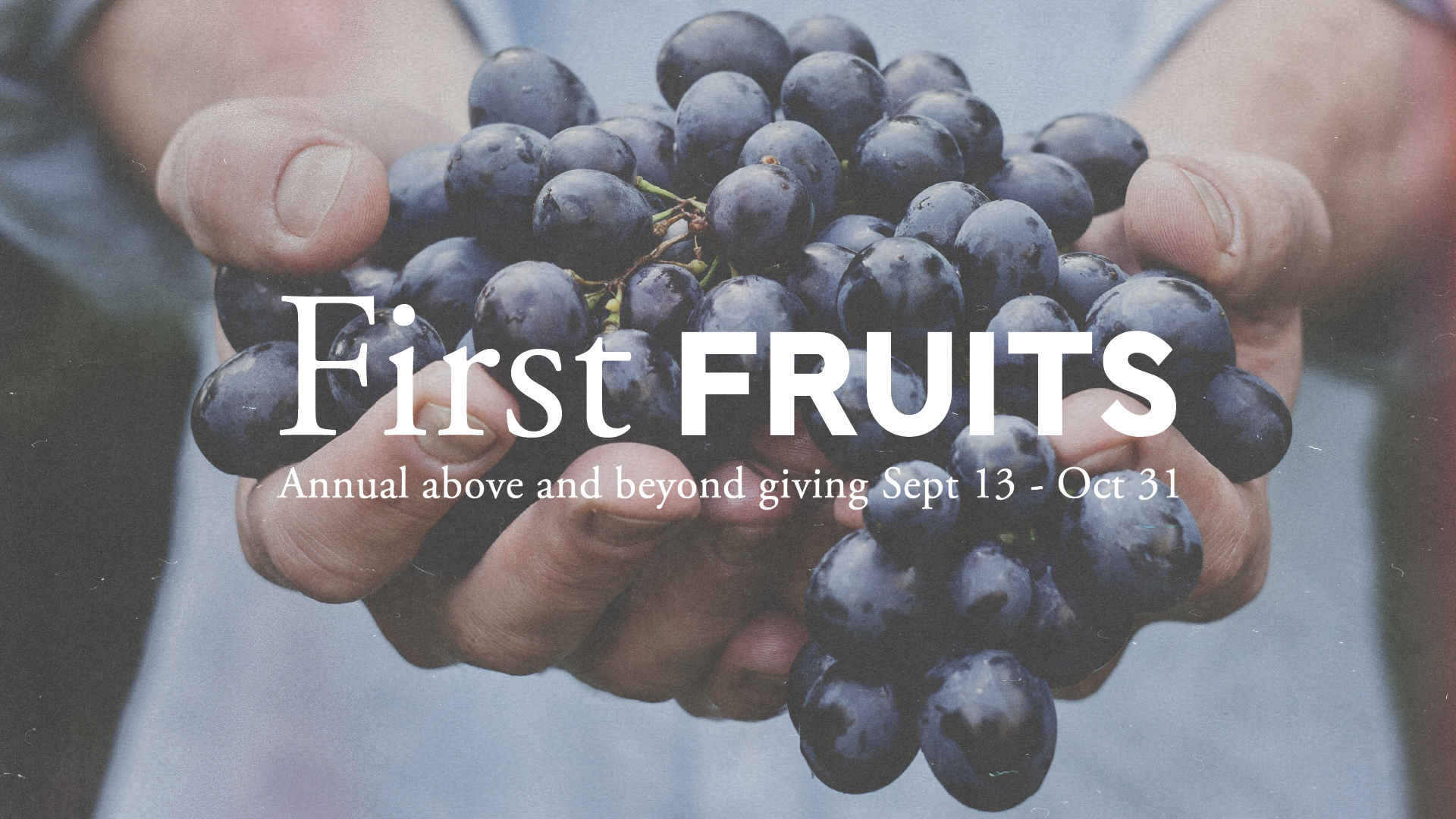
FIRST FRUITS OFFERING
Starting September 1 through the end of October (the beginning of our ministry calendar and fiscal year) we're inviting our church family into a season of prayer about First Fruits giving. This is a chance to trust God first with what He's given you, and Everyday Gives is part of how that generosity gets multiplied back out into our community.
Giving God the First
Why This Matters
Most of us set goals for the new year.
Budgets, resolutions, a fresh start. There's an older practice that does something different, it's not about self-improvement.
It's about trust.
It's called Firstfruits. If you've never heard of it, you're not alone. And even if you already give and tithe faithfully, Firstfruits isn't the same thing. It's not giving from what's left over.
It's giving from what comes first.
How Will it Be Used?
FirstFruits offering is going to be used for things like:
- future purchase of a facility
- unforseen ministry opportunities unexpected needs in the community
(emotional and physical natural disaster relief & support)
- new serving and outreach opportunites that pop up throughout the year
What Is Firstfruits?
Firstfruits is giving God the first and best of what you have, before you know how the rest of the year turns out.
In the Old Testament, when the first grain or fruit ripened, Israelite families set it apart for God before eating any of the harvest themselves (Leviticus 23:9-14).
They brought it to the temple. The priest offered it in worship. Only then could they eat from what they'd grown.
Proverbs 3:9 puts it simply: "Honor the Lord with your wealth, with the firstfruits of all your crops."
The Hebrew word is bikkurim, "the promise to come." Giving the first fruit wasn't a formality. It was a declaration: I trust there's more coming, and I trust You're the one bringing it.
What People Get Wrong
"Firstfruits is just another word for tithing." They're not the same. The tithe is a portion given regularly throughout the year (Leviticus 27:30). Firstfruits is the first portion, given once, that sets the tone for everything after it. Nehemiah 10:35-37 lists them separately for a reason.
"Firstfruits is only about money." The original practice included grain, oil, wool — whatever people produced first (Deuteronomy 18:4). It was never really about the harvest, but the heart. It was about what gets priority. For us, that might look like:
The first part of your morning, before the phone
The first move in a hard decision, choose prayer over worry
The first response in conflict, grace instead of defensiveness
The first of your time or skill, given before you build anything for yourself
Paul says it this way: "If the dough offered as firstfruits is holy, so is the whole batch" (Romans 11:16). Give God the first, and it changes how you hold the rest.
"This is an Old Testament thing. We're not under that anymore." We're not under the ceremonial law, that's true. But Paul calls Jesus "the firstfruits of those who have fallen asleep" (1 Corinthians 15:20). His resurrection is the first fruit — proof that everyone who follows Him will rise too. And James calls believers "a kind of firstfruits of all He created" (James 1:18). We're the promise of a harvest still coming.
The law changed.
The heart behind it didn't.
What This Looks Like for Us
We don't have fields or a temple. But the principle still holds: God gets the first, not the leftovers.
From September through October, we're setting aside this season as a church to practice it together.
Start praying now about what you'll give.
One way to think about it: consider what God would have you give FIRST before you know what the rest of the year holds.
What would it look like to give God the first of your time, not just what's left at the end of the day?
Is there an area of your life you've been giving God the leftovers instead of the first?
Romans 11:16 says the first sanctifies the whole. Where do you need that in your life right now?
More Scripture on Firstfruits
Exodus 23:19; 34:22-23 · Leviticus 2:12; 23:9-21 · Deuteronomy 18:4; 26:1-11 · Nehemiah 10:35-37 · Proverbs 3:9-10 · Romans 8:23; 11:16 · 1 Corinthians 15:20-23 · James 1:18